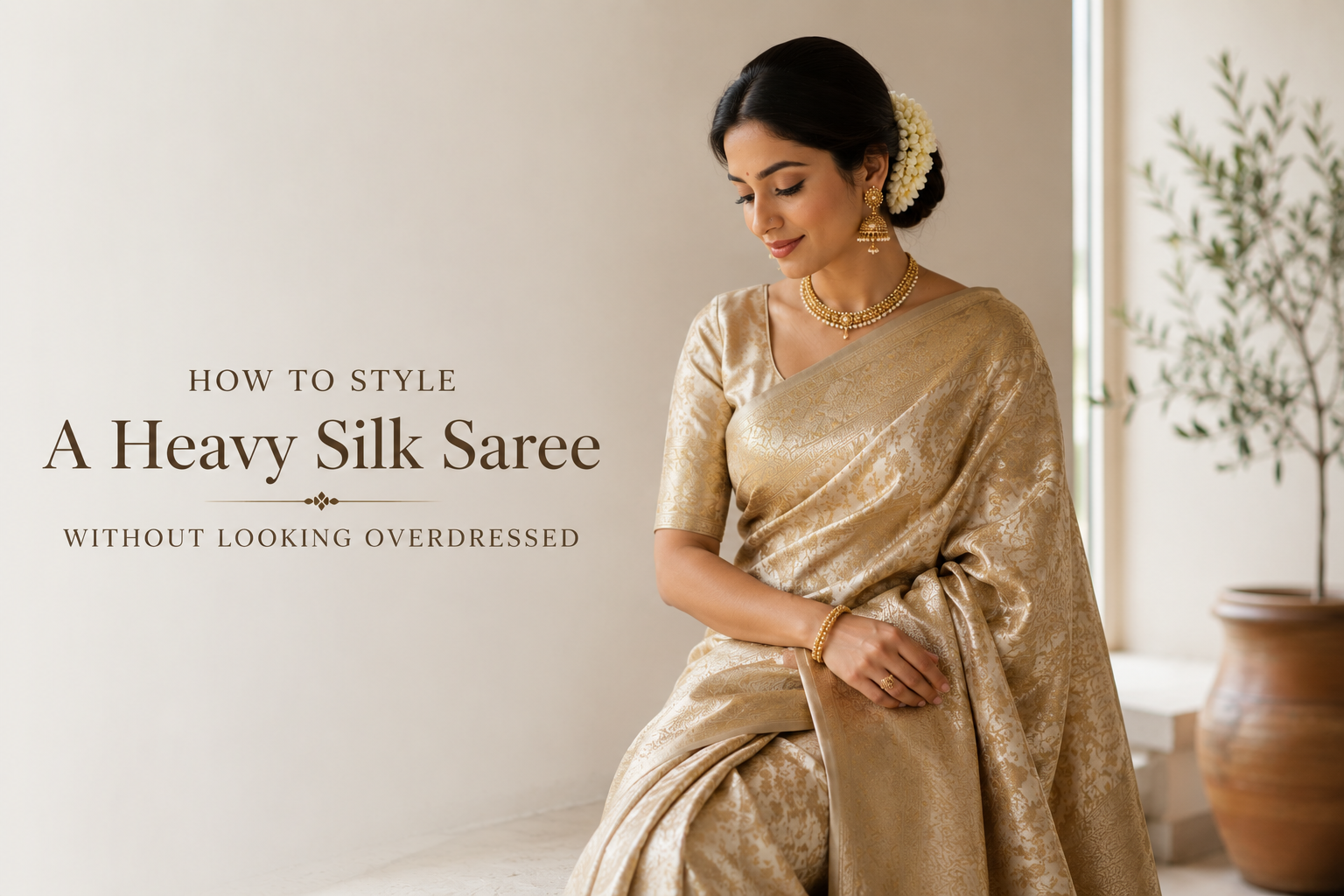
How to Style a Heavy Silk Saree Without Looking Overdressed
What Does It Mean to Style a Heavy Silk Saree Without Looking Overdressed?
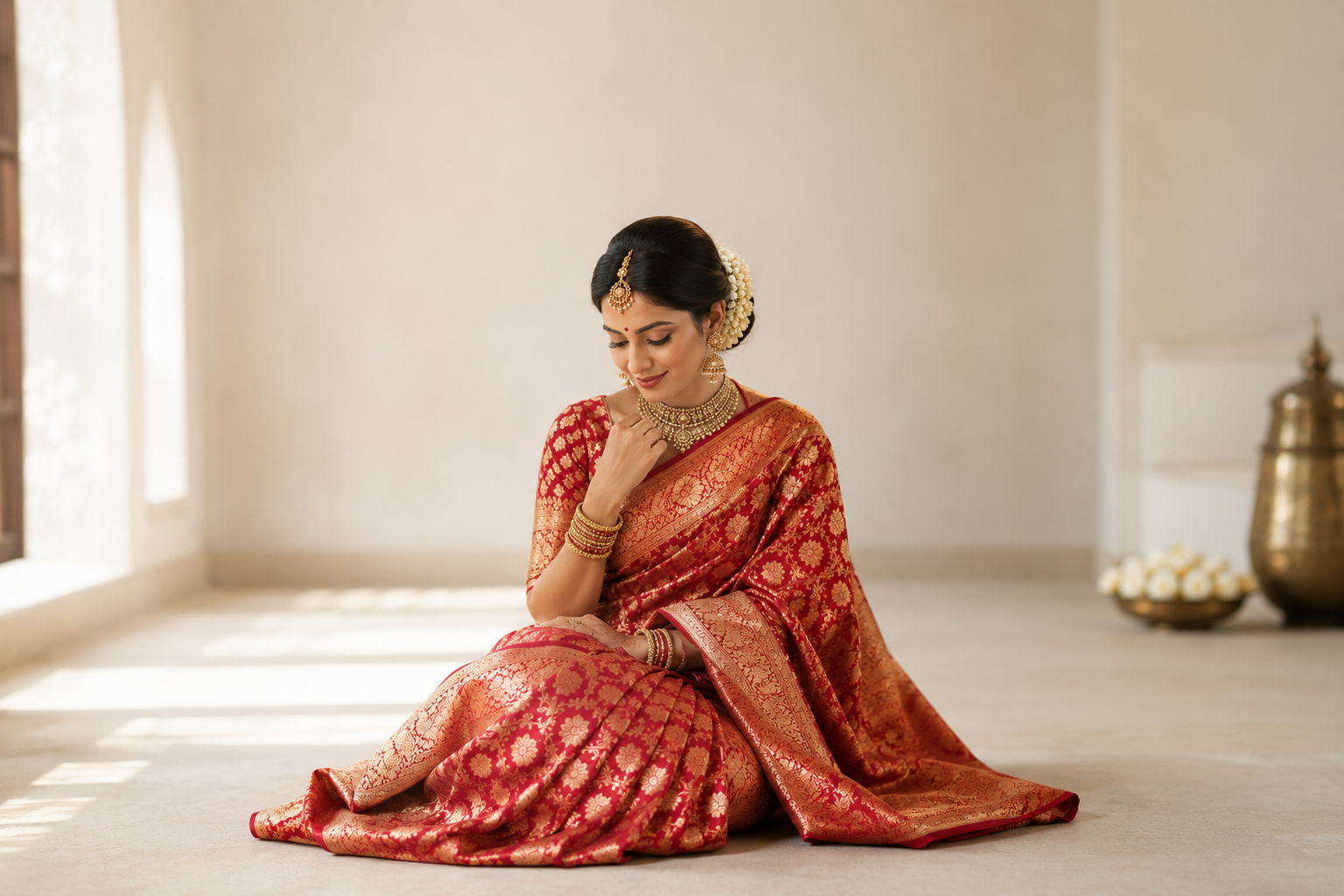
Styling a heavy silk saree without looking overdressed means letting the saree carry the richness while supporting details stay quiet. Visual overload usually comes from too many competing elements: zari, border, motifs, pallu, blouse work, jewelry, makeup, and event formality.
Rich silk already creates depth through sheen, structure, color, and movement. Extra embroidery, layered necklaces, glossy makeup, and ornate accessories can pull attention away from the saree and make the outfit feel bridal.
Occasion decides how much intensity belongs around the saree. Wedding ceremonies allow more ornamentation, while daytime functions, office celebrations, and religious gatherings usually suit cleaner hair, lighter accessories, and controlled shine.
How Do You Choose One Focal Point Before Styling the Saree?
Choose one element to lead before adding blouse detail, jewelry, makeup, or accessories.
-
Saree Lead: Let ornate borders, brocade, heavy zari, or a rich pallu stay central. Use a plain blouse, lighter jewelry, and softer makeup to keep attention on the fabric.
-
Blouse Lead: Use embroidery or strong contrast only when the saree body and pallu have enough visual breathing room. Lighter necklaces prevent crowding near the upper body.
-
Jewelry Lead: Statement earrings, a temple necklace, or a bangle stack can lead, but not together. One jewelry zone should frame the look.
-
Makeup Lead: Deep lipstick or defined eyes add polish when jewelry stays light. Full highlighter, glitter shadow, and bold lips together compete with silk sheen.
-
Color Lead: High contrast adds drama, while tonal styling softens the outfit. Event formality should guide contrast more than exact matching
Which Blouse Works Best With a Heavy Silk Saree?
With ornate borders, decorative pallus, and dense motifs, the blouse should add structure without crowding the upper body. Fabric, sleeve shape, neckline, and color decide whether the look feels refined, bridal, or visually heavy.
Plain Blouses
Beside ornate silk, a plain blouse creates a needed visual pause. Solid silk, raw silk, or matte-finish fabrics suit wide borders, dense motifs, and decorative pallus, while piping, potli buttons, or a neat back cut add finish without extra weight.
Contrast Blouses
Color can add drama without relying on more embroidery. Rich contrast works best when the saree body is calmer, while daytime functions usually look softer with tonal or low-contrast blouse shades.
Sleeve Length
Around the arms and shoulders, sleeve length changes how much visual weight the outfit carries. Elbow-length styles often suit traditional silk sarees, while shorter sleeves lighten the look when earrings or an open pallu already draw attention.
Full sleeves need restraint, especially with brocade fabric, zari cuffs, or a heavy pallu.
Neckline Shape
Jewelry and pallu placement need enough open space near the collarbone. Boat necks, round necks, and modest V-necks work well when necklaces are limited or skipped, while higher necklines usually pair better with earrings.
Deeper necklines leave room for one necklace when the pallu and border are not competing nearby.
How Much Jewelry Is Enough With a Heavy Silk Saree?
Jewelry feels right when one area looks intentional and the saree remains visible. Heavy silk can carry gold, pearls, stones, or temple jewelry, but every jewelry zone does not need equal emphasis.
Statement earrings with a bare neck often work better than earrings plus a large necklace when the pallu is ornate. Necklaces suit cleaner pallus and open necklines, while bangles and rings should stay lighter beside embroidered sleeves.
Temple jewelry can look graceful with traditional silk when the surrounding styling stays edited. Sleek hair, matte skin, and one major piece preserve cultural richness without creating full bridal volume.
How Should You Drape a Heavy Silk Saree So It Looks Neat?
Clean draping reduces bulk at the waist, controls the pallu, and keeps heavy silk comfortable through movement. Fit and fabric control matter because thick silk shows uneven folds quickly.
Narrow Pleats
Through the front fall, narrow pleats distribute thick fabric cleanly. Firm, even folds stop the saree from flaring outward, while careful border alignment keeps the lower line sharp.
Uneven pleats make rich silk look heavier than necessary.
Pallu Placement
Shoulder styling decides whether the saree reads relaxed, formal, or crowded. Open pallu styling shows the fabric beautifully, but it needs space from necklaces and bulky hair.
Pleated pallu styling creates a tidier line for office celebrations, pujas, and long ceremonies.
Secure Pins
Hidden pins keep the saree stable without making the drape rigid. Shoulder, waist, and pleat-base placement reduce slipping during walking, sitting, and standing.
Smaller pins placed from inside the fold protect polish and movement.
Petticoat Fit
At the waist, petticoat fit anchors the saree’s weight. Loose waistbands allow dragging, while very tight shapewear can distort pleats and restrict sitting.
Supportive cotton, satin, or saree shapewear works only when the fabric still falls naturally, and length should be checked after footwear is chosen.
What Hair and Makeup Keep Heavy Silk Sarees Looking Polished?
For polished styling, hair and makeup should frame the face without adding more shine than the silk and zari already bring.
-
Matte Base: Satin or matte skin finish keeps reflective fabric from competing with the face. Glow works best in small areas such as cheekbones.
-
Defined Eyes: Soft liner, mascara, or muted shadow adds shape without glitter. Strong eye makeup pairs better with quieter lips and jewelry.
-
Lip Color: Deep rose, berry, brown, red, or muted coral can suit silk sarees, depending on color and event formality. Very glossy lips with heavy gold jewelry can feel bridal at smaller functions.
-
Sleek Bun: Low buns, center-parted buns, or softly pinned hair keep the neckline tidy. Flowers need restraint when temple jewelry or blouse work is already strong.
-
Soft Curls: Loose waves or curls make traditional silk feel less formal for receptions and family gatherings. Excess volume near statement earrings can crowd the face.
-
Hair Detail: Small pins, one decorative clip, or a limited flower accent usually work better than multiple ornate pieces. Hair accessories should not become another jewelry set.
How Should Styling Change by Occasion?
Event formality sets the right level of shine, jewelry, blouse detail, drape structure, and makeup depth.
| Comparison Point | Daytime Function | Wedding | Office Celebration | Reception or Evening Function | Religious Ceremony |
|---|---|---|---|---|---|
| Shine Level | Soft makeup and fewer metallic accents suit natural light. | Zari and richer jewelry fit the setting when one focal point leads. | Muted shine and tidy draping look professional. | One metallic or jewel-toned accent adds polish. | Traditional texture can lead without added sparkle. |
| Jewelry Scale | Earrings or bangles usually feel sufficient. | Larger earrings, a necklace, or temple jewelry can work when edited. | Small earrings, a watch, or one bangle stack keeps the look restrained. | Statement earrings or one necklace adds evening formality. | Traditional jewelry works best in limited quantity. |
| Blouse Detail | Plain or tonal blouses keep the outfit lighter. | Embroidered blouses suit the setting when jewelry is reduced. | Structured, modest blouses look polished. | Contrast or deeper-toned blouses suit evening light. | Comfortable sleeves and necklines allow movement. |
| Drape Formality | Clean pleats and a lighter pallu setting feel graceful. | Open or pleated pallu can work with secure pins. | Pleated pallu gives a neater work-friendly line. | Open pallu can show fabric richness. | Secure draping helps during sitting, standing, and rituals. |
| Makeup Depth | Muted lips and controlled highlighter suit daytime. | Deeper lips or eyes can work, but not both at full intensity. | Neutral makeup keeps attention on the saree. | Defined eyes or richer lip color adds polish. | Soft finish and tidy hair usually feel appropriate. |
Which Footwear and Accessories Keep the Look Balanced?
Stable footwear and compact accessories should improve posture, length, and movement without adding another ornate surface. Comfortable heels, wedges, dress flats, or sandals need to be chosen before final draping so the border sits correctly.
Walking comfort matters because heavy silk reveals strain through dragging pleats, uneven pallu placement, and repeated adjustment. Stable footwear should suit stairs, ceremonies, dancing, or long standing periods.
Compact clutches, small potlis, and clean handbags usually work better than oversized embellished bags. Belts can look stylish with selected sarees, but a belt over a heavy border, ornate blouse, and layered jewelry crowds the waist.
What Styling Mistakes Make a Heavy Silk Saree Look Too Dressed Up?
Overdressing usually comes from stacking several high-impact choices instead of letting one element lead.
-
Heavy Blouse: Dense blouse embroidery beside a rich pallu creates too much shine near the upper body. Plain or lightly detailed blouses work better with wide borders and ornate pallus.
-
Layered Jewelry: Earrings, necklace, bangles, rings, waist belt, and hair ornaments together create bridal intensity. Select one main jewelry zone and reduce the rest.
-
Glossy Makeup: Highlighter, glitter shadow, glossy lips, and reflective silk can look harsh under bright lights. Choose one shine point and keep skin texture controlled.
-
Bulky Pleats: Wide or uneven pleats add weight around the waist and legs. Narrow folds and secure tucking create a cleaner fall.
-
Exact Matching: Matching blouse, jewelry, clutch, bindi, bangles, and makeup too literally can feel costume-like. Tonal variation gives the outfit more depth.
-
Large Bag: Oversized embellished bags compete with zari and borders. Smaller bags keep the hand area polished without adding clutter.
-
Bridal Cues: Flowers, layered gold, heavy blouse work, red lips, and a dramatic bun together create a bridal mood. Removing one or two cues makes the look more occasion-appropriate.
How Can You Judge Whether the Final Look Is Balanced?
Final balance shows when the eye can read the saree, face, and occasion without clutter. One element should dominate, whether saree, blouse, jewelry, or makeup; if all four stand out equally, reduce the loudest supporting detail.
Hair, earrings, neckline, and necklace should leave open space around the face. Crowding near the jawline or collarbone makes the outfit feel heavier.
Pallu placement should feel secure without looking flattened. Footwear, pleats, and petticoat should allow walking, sitting, and standing without constant correction.
Shine and ornamentation should match the event’s formality. Smaller gatherings usually need less jewelry, softer makeup, and cleaner accessories.
How Should You Choose Styling Pieces for a Heavy Silk Saree?
Start with saree richness, then judge formality, comfort, pricing, and reuse value. Heavier borders and ornate pallus need quieter support pieces, while simpler silk sarees can carry stronger jewelry or blouse detail.
Budget decisions work best when money goes toward flexible pieces rather than one fully matched set. Plain blouses, classic earrings, neutral footwear, and compact clutches can support several silk sarees across weddings, pujas, receptions, and family functions.
Pricing context matters most when choosing between a statement blouse, jewelry upgrade, footwear, or bag. Higher-cost pieces should earn their place through repeat wear, while lower-cost accents can refresh the saree without locking the whole look into one occasion.
Flexibility matters because each event changes the styling balance. With restrained blouse detail, one reliable jewelry focus, and stable footwear, the same wardrobe supports more outfit options without forcing every saree into the same formal look.
Final Thoughts
Styling a heavy silk saree well comes down to one practical rule: let the saree carry the richness, then reduce one or more supporting elements. Blouse embroidery, jewelry scale, makeup shine, hairstyle volume, and accessory ornamentation should not all peak together.
Occasion, comfort, and saree structure should guide every choice. Wide borders, heavy pallus, and dense motifs need quieter pieces around them, while simpler silk sarees can carry stronger jewelry or blouse detail.
Grace comes from editing, not removing tradition. Rich silk, temple jewelry, flowers, and formal drapes can all look beautiful when one element leads and the rest of the outfit gives it room.
Frequently Asked Questions
Can a Heavy Silk Saree Be Styled for a Daytime Event?
Yes, a heavy silk saree can work during the day when shine and accessories are reduced. Softer makeup, a plain blouse, smaller jewelry, and clean pleats keep the look graceful in natural light.
What Blouse Looks Best With a Heavy Silk Saree?
Plain or lightly detailed blouses usually work best with ornate heavy silk sarees. Contrast blouses can also look refined when the saree body is calmer and the pallu is not overloaded.
How Much Jewelry Is Enough for a Heavy Silk Saree?
One main jewelry focus is usually enough for a heavy silk saree. Statement earrings, a single necklace, or a bangle stack can lead while smaller pieces finish the look quietly.
Should the Pallu Be Pinned or Left Open?
Pinned pallus work best when comfort, movement, or a tidy shoulder line matters. Open pallus suit occasions where the decorative section deserves more display and the neckline is not crowded.
Can a Heavy Silk Saree Look Modern Without Losing Its Traditional Feel?
Yes, heavy silk can look modern through cleaner blouse shapes, restrained jewelry, softer hair, and controlled makeup. Traditional richness remains intact when the saree’s fabric, border, and pallu still lead.
How Can Petite Wearers Reduce Bulk in a Heavy Silk Saree?
Petite wearers can reduce bulk with narrow pleats, a fitted petticoat, stable footwear, and a blouse that does not add shoulder volume. Pallu placement should avoid excess fabric bunching near the torso.
What Makeup Works Best With Silk Sarees That Already Have Shine?
Matte or satin-finish makeup works best when silk sarees already reflect light. Defined eyes or a rich lip can add polish, but highlighter and glitter should stay controlled.
Also Read: