Kanjivaram vs Banarasi Saree: How to Choose the Right Bridal Silk
What Is a Kanjivaram Saree?
Kanjivaram is a silk saree tradition from Kanchipuram in Tamil Nadu, recognized for dense silk, bold borders, and a structured bridal drape. According to the Kancheepuram district government, Kancheepuram silk received geographical indication recognition in 2005-06.
Bridal shoppers may also hear Kanjivaram described as Kanchipuram silk or Kanchi Pattu. Contrast borders, rich pallus, temple motifs, checks, stripes, peacocks, rudraksha patterns, and geometric forms give the saree its formal wedding identity.
Wedding use often centers on muhurtham rituals, temple jewelry, family ceremonies, and heirloom planning. Firm silk body holds pleats with presence, which suits brides who want structure rather than soft movement.
Key Features of a Kanjivaram Saree
Silk density, border contrast, and motif clarity give Kanjivaram sarees their formal bridal shape.
-
Silk Body: Dense silk creates a firm fall and pronounced pleats. Brides who want visible structure often prefer this weight and body.
-
Contrast Border: Defined borders separate the body from the edge and frame the drape in photographs. Color contrast also highlights jewelry, blouse work, and pleat lines.
-
Pallu Structure: Rich pallus create ceremony focus near the shoulder. Longer rituals need secure draping so the pallu stays comfortable during sitting, standing, and walking.
-
Temple Motifs: Temple borders, peacocks, rudraksha patterns, checks, and stripes connect the saree to South Indian bridal styling. Motif scale should match jewelry size and blouse embroidery.
-
Drape Presence: Firm pleats create a composed bridal silhouette. Brides who prefer fluid movement should compare fabric feel before committing
What Is a Banarasi Saree?
Banarasi is a Varanasi, or Banaras, saree tradition known for brocade weaving, zari detail, and ornate surface patterning. Banaras Brocades and Sarees appear in official handloom geographical indication records from the Office of the Development Commissioner for Handlooms.
Brocade gives the Banarasi saree its bridal identity. Katan silk is a familiar form, while tissue, organza, georgette, jangla, butidar, tanchoi, and cutwork variants change sheen, weight, and drape.
Mughal-inspired motifs often include floral vines, paisley, kalga, bel, jaal, and all-over patterning. Bridal styling usually suits pheras, North Indian ceremonies, receptions, and detailed blouse or dupatta pairings.
Key Features of a Banarasi Saree
Brocade texture, zari patterning, and fabric variety create the Banarasi saree's ornate bridal effect.
-
Brocade Weave: Raised or densely patterned weaving creates a worked surface that catches wedding lighting. Pattern density affects how ceremonial the saree appears.
-
Zari Work: Metallic threadwork shapes borders, pallus, butis, and jaal layouts. Buyers should ask what the seller means by zari instead of assuming a fixed composition.
-
Fabric Variants: Katan, tissue, organza, georgette, and other variants drape differently. Fabric naming matters because Banarasi is not one single weight or feel.
-
Floral Motifs: Floral vines, paisleys, bel patterns, and jaal designs create ornamental detail. Smaller motifs feel delicate, while full jaal layouts look more ceremonial.
-
Ornate Drape: Brocade and pallu detail photograph well during pheras, reception entries, and seated portraits. Comfort still depends on fabric thickness, blouse fit, and jewelry weight.
-
Styling Range: Banarasi options can suit a main wedding look, reception styling, or post-wedding occasion wear. Fabric variant and zari density decide how flexible the saree feels after the wedding day.
How Do Kanjivaram and Banarasi Sarees Differ?
Origin, construction, motif language, and drape behavior create the practical difference between Kanjivaram and Banarasi sarees.
| Comparison Point | Kanjivaram Saree | Banarasi Saree |
|---|---|---|
| Origin | Kanchipuram, Tamil Nadu | Varanasi or Banaras, Uttar Pradesh |
| Craft Identity | Dense silk body with bold borders and pallus | Brocade-led saree with intricate zari patterning |
| Fabric Feel | Usually firm and structured | Ranges from rich Katan to lighter organza or georgette variants |
| Weave Focus | Body, border, and pallu contrast carry the look | Surface motifs, brocade density, and pallu detail carry the look |
| Motif Language | Temple borders, checks, stripes, peacocks, rudraksha, geometric forms | Floral vines, paisley, kalga, bel, jaal, butis, Mughal-inspired patterns |
| Color Story | Jewel tones, bold contrasts, and traditional bridal combinations | Red, maroon, gold, pastels, jewel tones, and metallic brocades |
| Drape Behavior | Holds pleats with a formal, structured fall | Changes by fabric type, from crisp brocade to softer movement |
| Ceremony Fit | Muhurtham, South Indian weddings, temple jewelry, heirloom bridal wear | Pheras, North Indian weddings, receptions, ornate blouse and dupatta styling |
| Reuse Potential | Strong for family ceremonies and heirloom wardrobes | Variant-dependent, with lighter forms suited to more repeat occasions |
Which Saree Looks Better for Different Wedding Styles?
Ceremony style should guide the saree choice more than a fixed regional rule.
South Indian Ceremonies
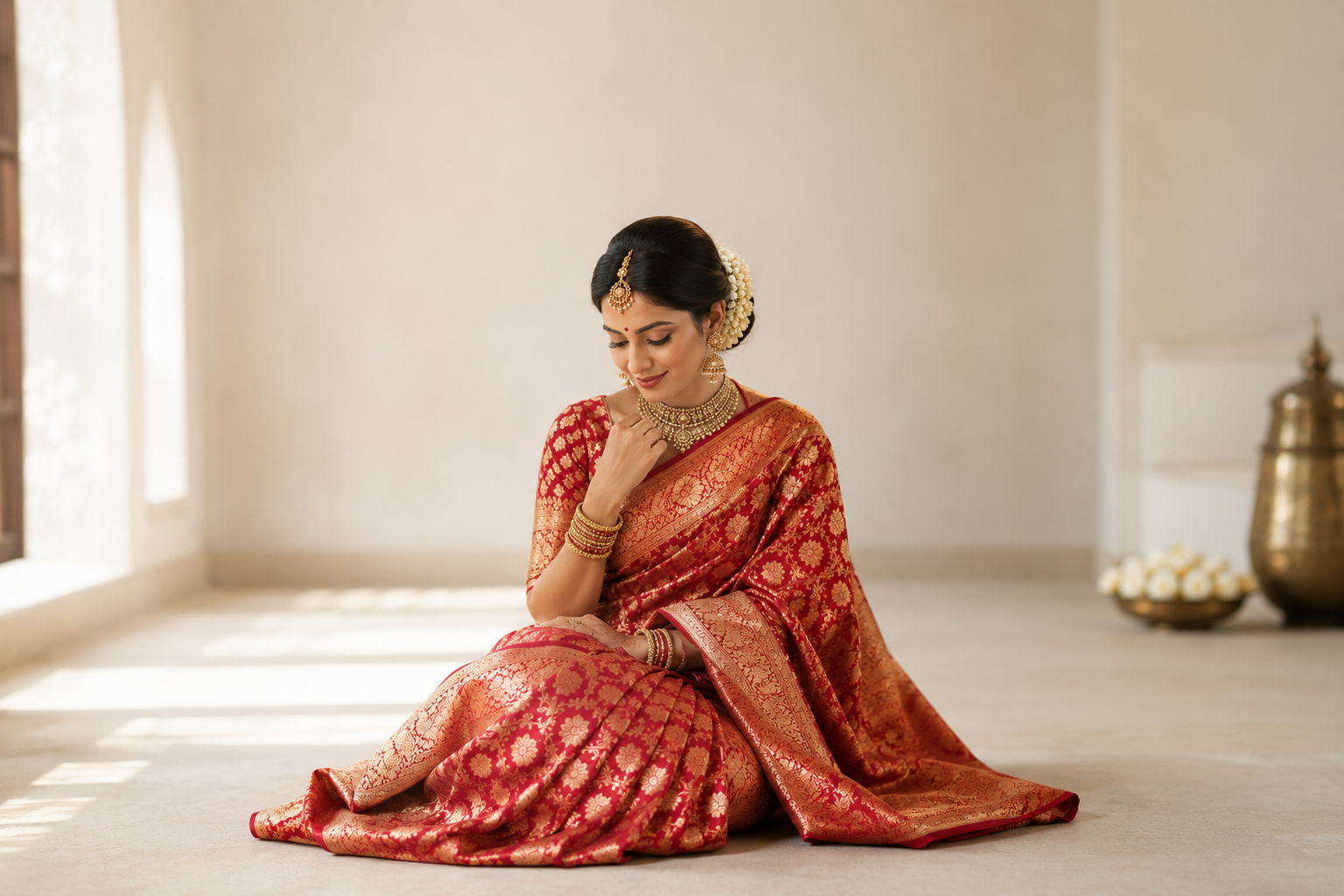
Muhurtam rituals, temple jewelry, traditional hair adornment, and family expectations often align with Kanjivaram structure. Banarasi can still work when brocade detail suits the bride's styling plan and the family accepts a cross-regional look.
Jewelry scale, blouse cut, and draping method decide whether the final outfit feels intentional.
North Indian Ceremonies
Pheras, reception styling, and dupatta layering often suit Banarasi brocade, red or maroon palettes, ornate pallus, and detailed blouse work. Kanjivaram offers a structured alternative for brides who prefer bold silk and contrast borders over all-over patterning.
Gold jewelry, veil styling, and embroidery choices can adapt either saree tradition to the ceremony.
Mixed Wedding Rituals
Interregional weddings often need one saree choice to respect family symbolism and another to reflect personal style. Brides may wear Kanjivaram for a muhurtham or family ceremony, then choose Banarasi for pheras, reception, or a post-wedding dinner.
Event length, venue temperature, seating, and jewelry weight should shape the final pairing.
How Do Fabric, Weave, and Zari Affect Wearability?
Wearability comes from how silk body, weaving method, zari placement, and finishing behave during a real wedding event.
Silk Body
Fabric density controls structure, fall, and pleat behavior. Firm Kanjivaram silk creates pronounced pleats, while Banarasi variants can range from substantial Katan to lighter georgette or organza.
Weave Technique
Weaving method determines motif sharpness, pattern density, and movement. Kadwa-style Banarasi work is often treated as premium, while Kanjivaram quality is judged through silk feel, border joining, pallu finish, and motif clarity.
Zari Placement
Metallic thread distribution changes both visual weight and physical comfort. Dense brocade across the body creates continuous ornamentation, while a bold border and pallu concentrate richness in defined areas.
Reverse Finish
Back-side inspection reveals construction quality without damaging the saree. Loose threads, unclear pattern backs, or vague seller explanations should prompt closer inspection before purchase.
Which Motifs and Colors Suit a Bridal Look?
Jewelry, ceremony formality, and photography needs should guide motif scale and color contrast.
-
Temple Motifs: South Indian bridal styling often pairs well with temple borders and traditional symbols, especially with antique gold jewelry. Larger motifs need simpler blouse work to avoid visual crowding.
-
Floral Brocade: Banarasi bridal looks often use floral vines and paisley patterns with ornate blouses or dupattas. Fine brocade adds detail without requiring oversized jewelry.
-
Contrast Borders: Full-length photos show pleats more distinctly when contrast borders frame the saree. Bold borders suit muhurtham rituals and family portraits.
-
Jaal Patterns: All-over jaal creates a continuous ornamental surface. Reception styling benefits from lighting that catches repeated zari detail.
-
Jewel Tones: Deep red, maroon, emerald, rani pink, purple, and gold create formal bridal impact. Saturated colors also pair well with traditional gold jewelry.
-
Soft Metallics: Champagne, antique gold, pastel, and tissue-like finishes suit lighter ceremonies or reception looks. Careful blouse pairing keeps subtle metallics from fading under bright light.
How Should Buyers Check Authenticity Before Purchase?
Documentation, seller transparency, and construction details matter more than risky home tests.
-
Silk Mark: Silk Mark certification relates to pure natural silk through the Silk Mark Organisation of India and Central Silk Board ecosystem. Certification adds useful evidence, but seller credibility and product details still matter.
-
GI-Aware Sourcing: GI-aware sellers can explain how Kanchipuram silk or Banaras brocades connect to recognized production identity. Labels such as "Banarasi style" or "Kanjivaram look" may describe inspiration rather than origin.
-
Seller Documentation: Reliable listings name the fabric variant, zari claim, blouse material, saree length, care instructions, and return terms. Vague descriptions make online comparison risky.
-
Weave Details: Close-up photos of the border, pallu, reverse side, blouse fabric, and motif edges reveal construction. In-store buyers should examine border joining and pallu fall during draping.
-
Return Terms: Written return or exchange terms matter when fabric feel, color accuracy, or weight differs from expectations. Bridal purchases should not rely only on verbal assurances.
How Do Care and Heirloom Plans Change the Choice?
Care planning matters because bridal silk is often bought for repeat ceremonies, gifting, or family handover. Kanjivaram and Banarasi sarees both need careful folding, dry cleaning guidance, and protection from moisture, harsh light, and rough storage.
Zari areas deserve special attention because friction, pressure, and careless folding can dull the surface over time. Periodic airing, refolding along different lines, and breathable storage reduce stress on fixed creases.
Heirloom value depends on material quality, construction, emotional significance, and future wearability. Brides planning frequent reuse may prefer a softer Banarasi variant, while family handover plans may favor a classic Kanjivaram with strong ceremony identity.
Which Decision Metrics Matter Before Buying?
Practical metrics turn a beautiful saree into a wearable wedding choice.
| Metric | What to Check | Why It Matters |
|---|---|---|
| Ritual Comfort | Ceremony length, venue heat, jewelry weight, sitting requirements, blouse fit, drape security, and pallu weight | Heavy styling becomes harder when the saree restricts movement during long rituals. |
| Authenticity Confidence | Certification, fabric naming, close-up images, written terms, origin claims, and material details | Clear evidence lowers purchase risk, especially for online bridal shopping. |
| Styling Fit | Motif scale, color, border width, zari density, jewelry, and blouse work | Heavy jewelry usually needs a saree that frames it instead of competing with every detail. |
| Reuse Potential | Receptions, family ceremonies, festivals, post-wedding dinners, and future comfort | Lighter Banarasi variants may repeat more comfortably, while classic Kanjivaram sarees carry formal family value. |
| Care Burden | Storage space, cleaning access, refolding habits, zari preservation, and delicate finishes | High-maintenance sarees need more disciplined handling than everyday festive wear. |
How Should You Choose Between Kanjivaram and Banarasi for a Wedding?
Start with ceremony tradition, family expectations, event length, and climate. Kanjivaram usually fits muhurtham ceremonies, South Indian rituals, and temple jewelry, while Banarasi usually fits pheras, North Indian bridal styling, and brocade-led reception looks. Longer ceremonies in warm venues need manageable fabric weight, secure pleats, and a blouse that allows movement; shorter receptions can carry more ornate surface detail when comfort remains practical.
Drape preference, motif scale, jewelry, and authenticity proof should narrow the shortlist before payment. Kanjivaram suits brides who want firm pleats and a structured fall, while Banarasi suits brides who want brocade richness with fabric options that may feel softer or lighter. Pricing should be compared through fabric quality, zari claim, weave complexity, seller documentation, blouse inclusion, alteration needs, and return terms rather than headline price alone.
Reuse plans, care expectations, and styling flexibility should decide the final purchase. Engagements, family ceremonies, post-wedding dinners, and festive wear may favor different weights and colors than the main wedding ritual. Across rituals, seasons, jewelry choices, and blouse pairings, a flexible bridal saree should keep its core identity while still working beyond one ceremony.
Final Thoughts
Kanjivaram is the stronger fit for brides who want structured silk presence, bold color contrast, temple-inspired motifs, and South Indian ceremony alignment. Heirloom-focused buyers may also prefer its formal bridal identity and firm drape.
Banarasi is the stronger fit for brides who want ornate brocade, floral or paisley motifs, softer variant options, and North Indian styling. Reception looks, pheras, and detailed blouse pairings often benefit from its pattern density and metallic surface work.
Better wedding choices come from matching the saree to the event rather than treating one tradition as universally superior. Ceremony conditions, comfort, authenticity proof, styling plans, and care expectations should decide whether Kanjivaram or Banarasi belongs at the center of the bridal wardrobe.
Frequently Asked Questions
Which Is Better for a Wedding, Kanjivaram or Banarasi?
Kanjivaram is usually better for a bride who wants structured silk presence, bold contrast borders, and South Indian ceremony alignment. Banarasi is usually better for brocade richness, intricate motifs, North Indian wedding styling, and reception-ready ornamentation.
Is Kanjivaram Heavier Than Banarasi?
Many Kanjivaram sarees feel more structured because of their silk body and formal drape. Banarasi weight changes by fabric variant and brocade density, so Katan feels different from organza or georgette.
Are Kanchipuram and Kanjivaram Sarees the Same?
Kanchipuram and Kanjivaram are closely related names tied to the same silk tradition from Kanchipuram. Kanchi Pattu is another familiar name buyers may hear in South Indian bridal shopping.
Can a Bride Wear Banarasi for a South Indian Wedding?
Yes, a bride can wear Banarasi for a South Indian wedding when family expectations, jewelry, blouse design, and draping style support the choice. Regional identity should guide the decision rather than restrict it completely.
Can a Bride Wear Kanjivaram for a North Indian Wedding?
Yes, a bride can wear Kanjivaram for a North Indian wedding, especially when she wants bold silk structure and contrast borders. Blouse styling, jewelry, and dupatta choices can adapt the saree to the ceremony.
Which Saree Is Easier to Drape?
Draping ease depends on fabric weight, stiffness, pleat behavior, and draper skill. Lighter Banarasi variants may feel more flexible, while structured Kanjivaram sarees hold pleats with visible presence.