
Baluchari
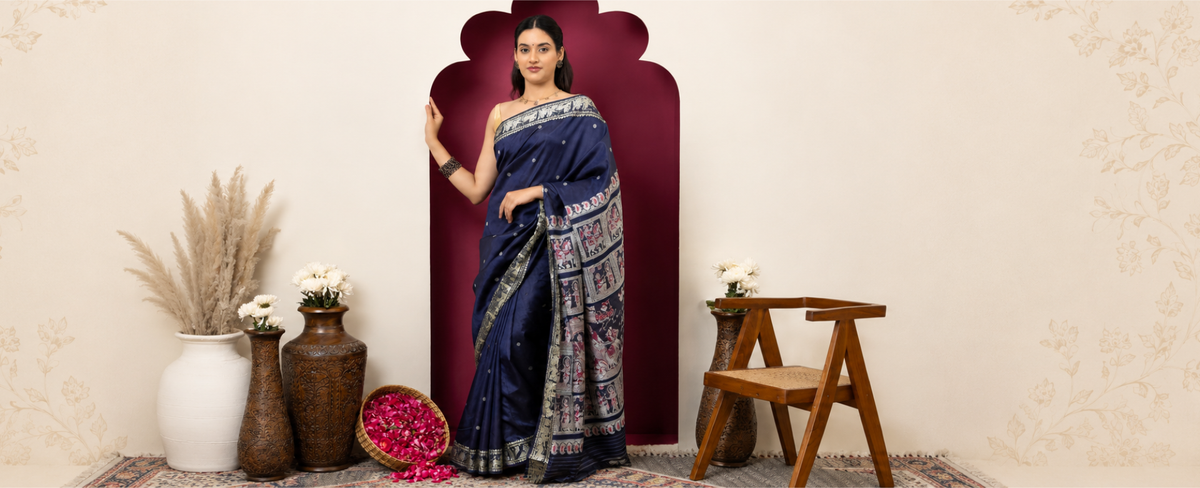
A Baluchari saree is more than a weave; it is a story told in silk.
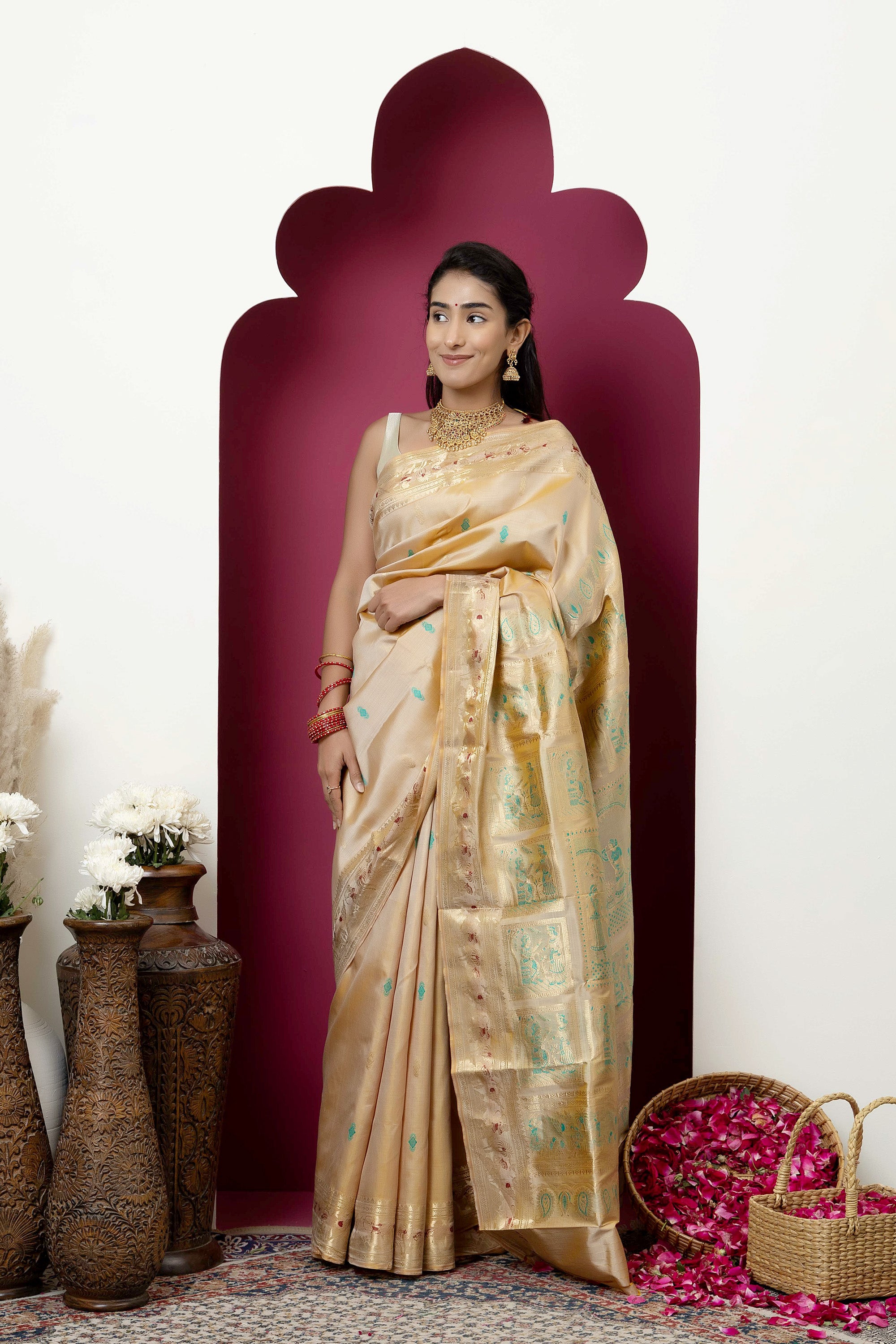
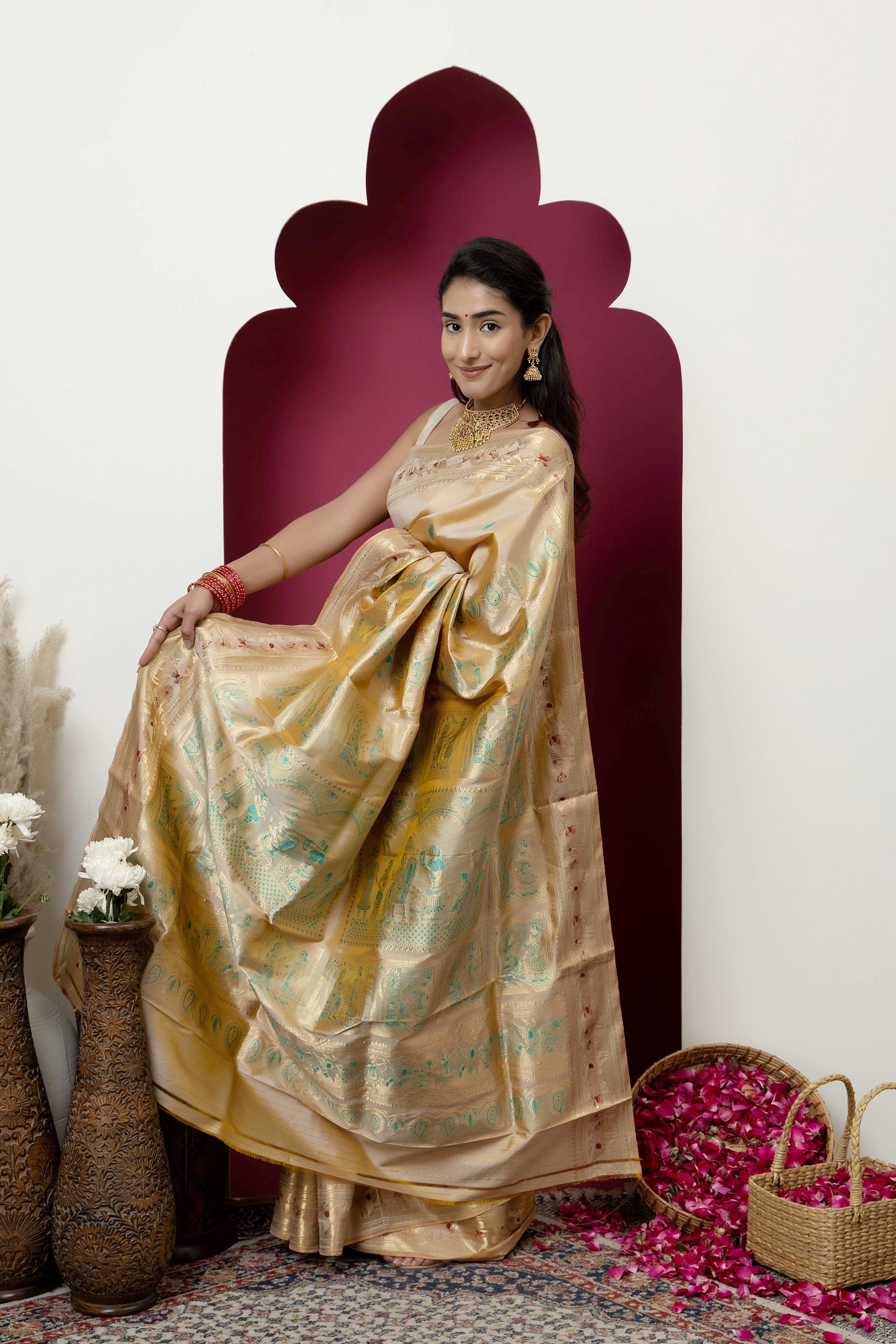
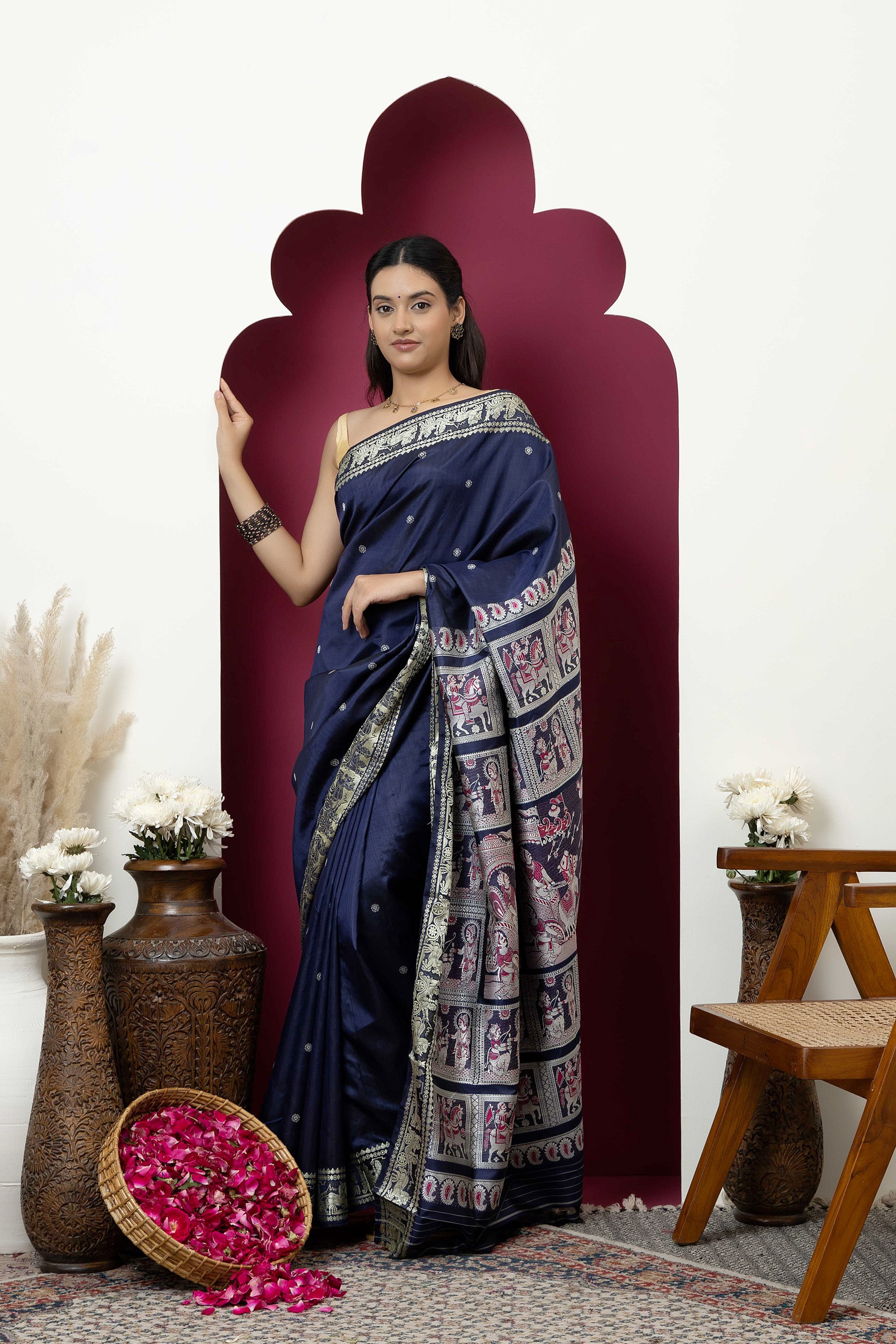
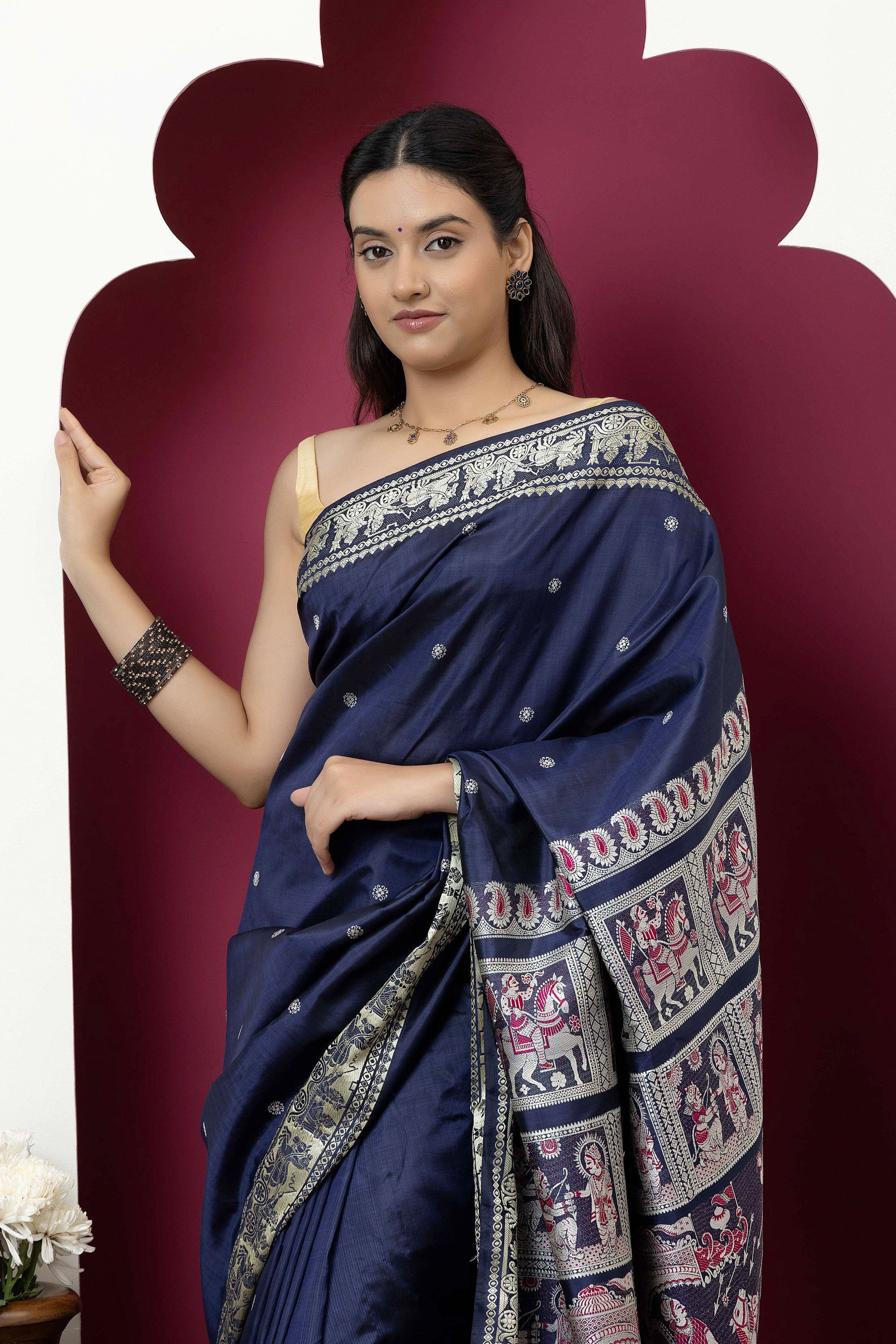
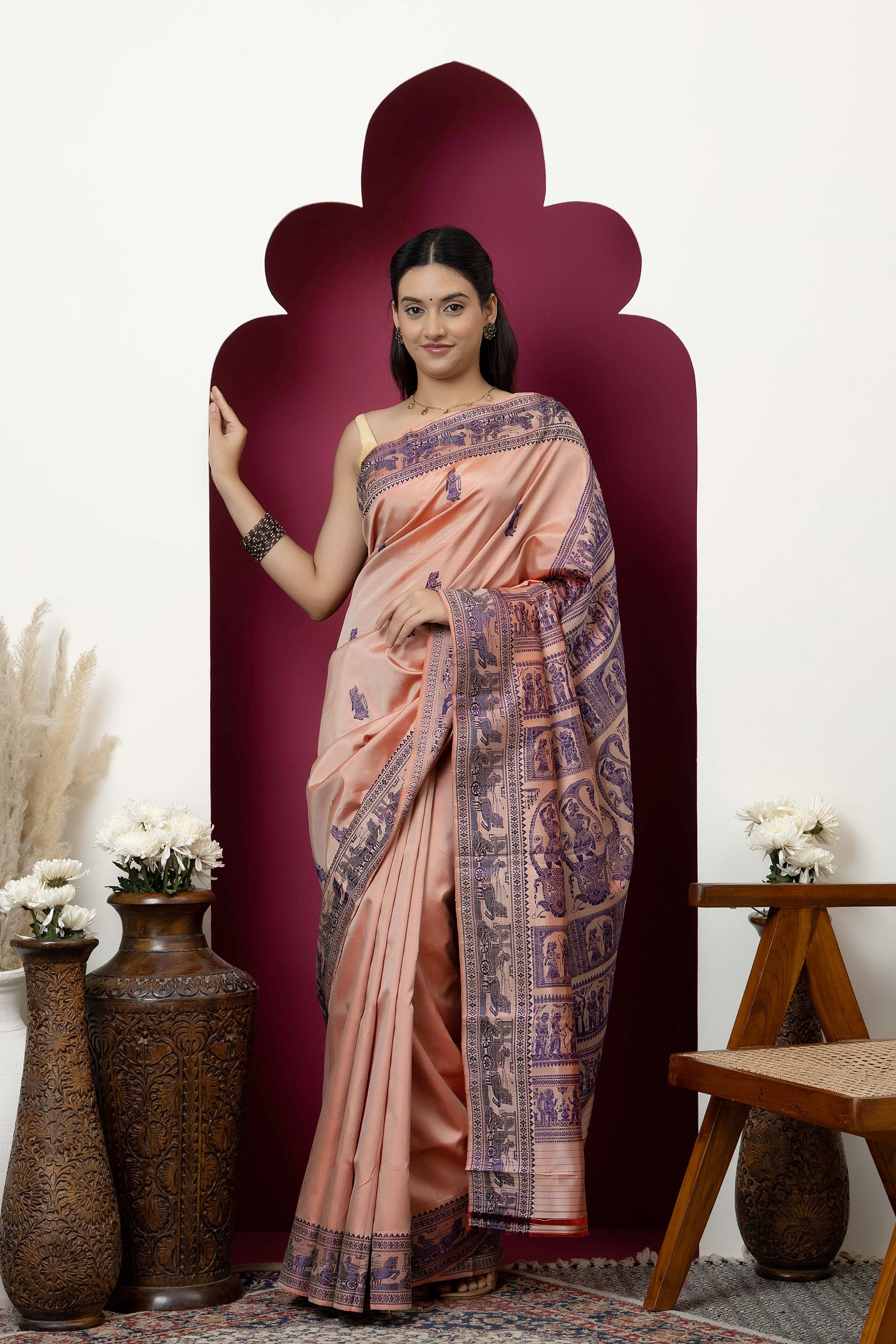
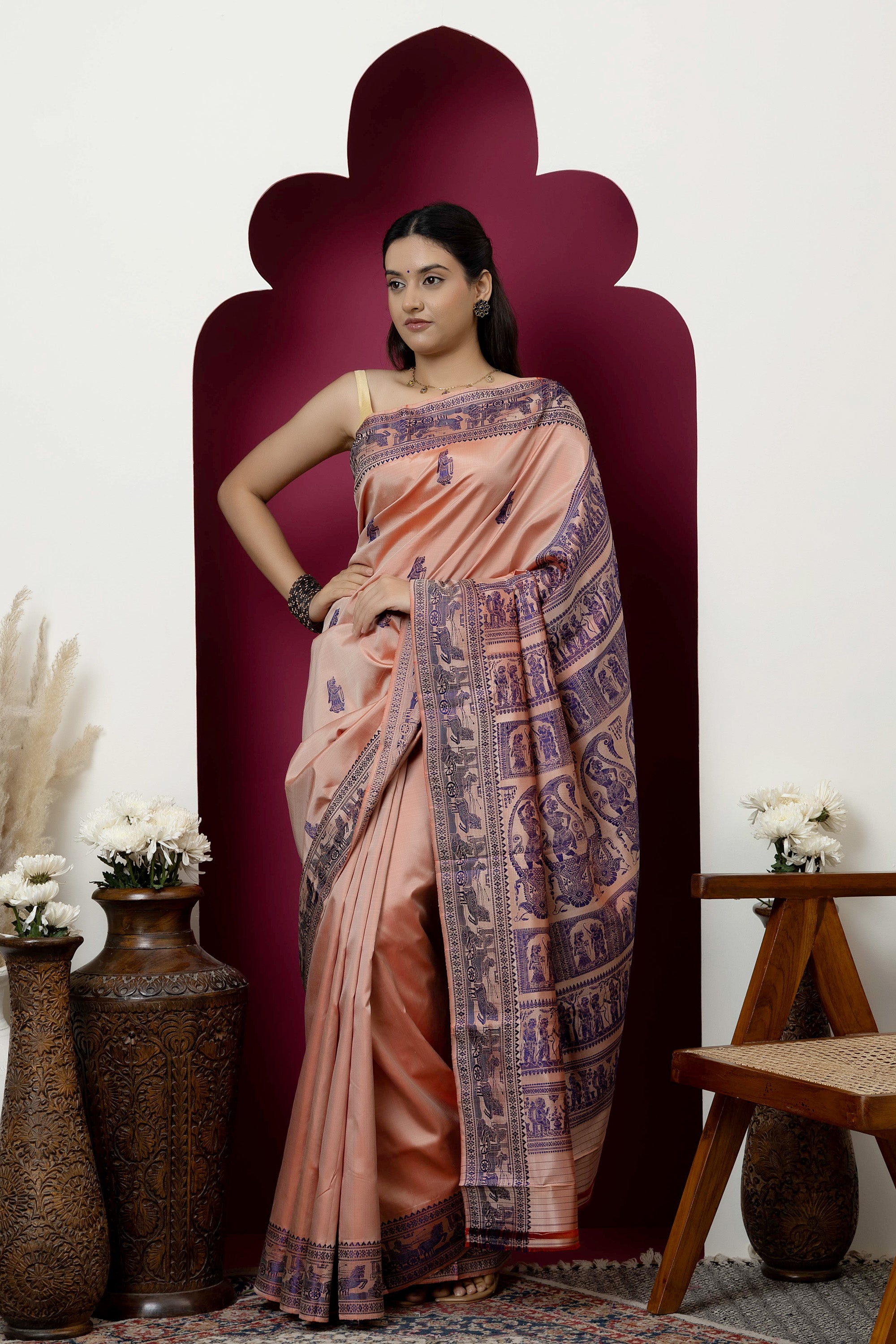
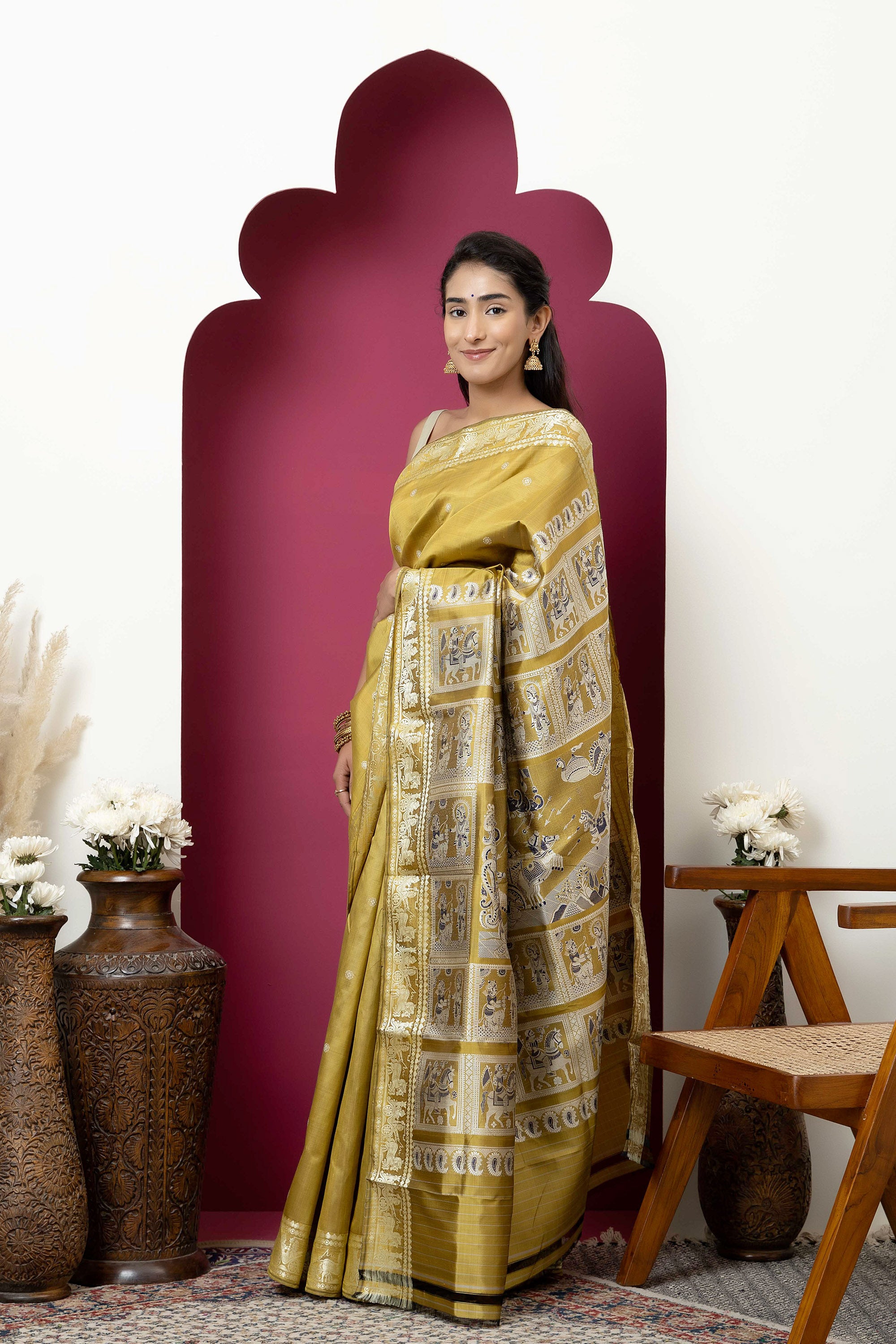
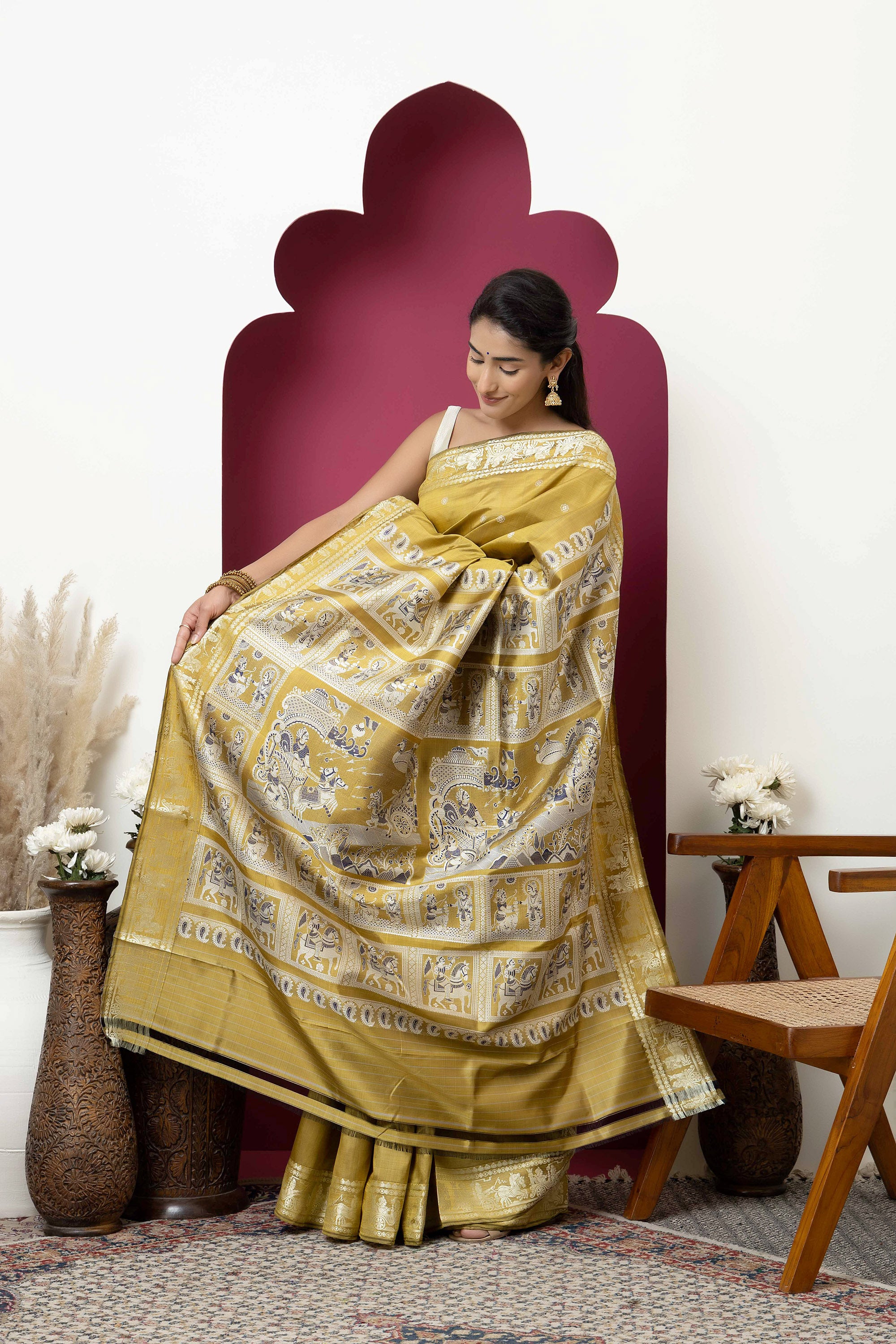
Baluchari is known for its intricate woven motifs, often inspired by mythological epics like Ramayan and Mahabharat, nature, architecture, and scenes from everyday life. Every pallu and border carries a narrative, patiently woven thread by thread into the fabric.
What makes it truly special is that the story is not printed or embroidered onto the saree, but it is created on the loom itself. The weaver transforms silk and imagination into a moving tapestry, preserving stories that have travelled through generations.
To wear a Baluchari is, in a way, to wear a piece of India’s history, with a story of its own.
Scenes, Not Motifs
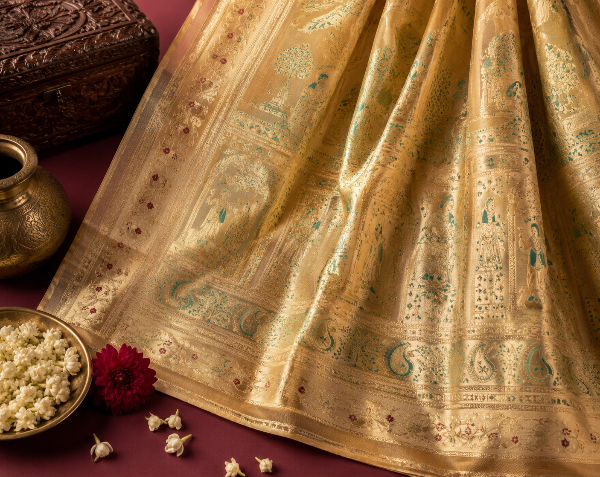
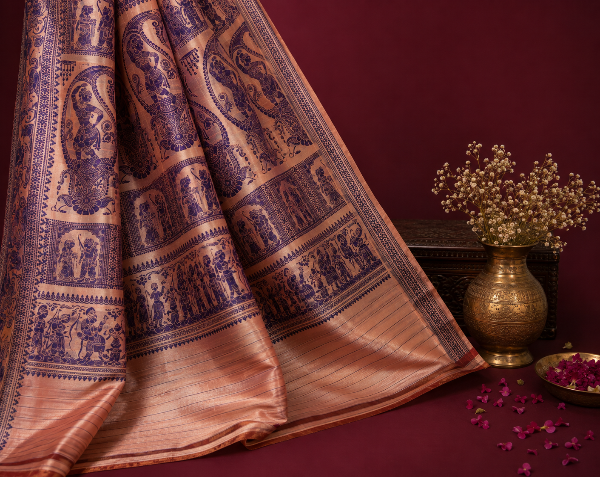
Most silk weaves decorate the pallu. Baluchari fills it. Rows of human figures, arches, riders and carriages are woven into the cloth itself, each one plotted on graph paper long before the first thread is thrown. The body of the sari stays quiet by design so the eye travels to the end.
From Murshidabad to Bishnupur
The craft began in Baluchar, a village on the Bhagirathi in Murshidabad, and shifted to Bishnupur in Bankura after the river took the old weaving settlement. Weavers there have carried it since. Bishnupur and the villages around it remain the only place a true Baluchari is woven.
Handloom Pure Silk
Baluchari Sarees
Handcrafted Indian Sarees & Suits in Natural Fabrics
