How to Style a Saree for a Party: 7 Ways to Stand Out Elegantly
A memorable party look is rarely created by choosing the brightest saree, the heaviest blouse and the most jewellery. It comes from making each element work together.
If you are wondering how to style a saree for a party, begin with the occasion. Then choose a fabric that suits the setting, the length of the event and how much you expect to move. Build the colour, blouse, drape and accessories around one clear focal point. When one element leads and the others support it, the entire look feels deliberate.
This guide takes you through seven practical party wear saree styling decisions, from selecting the right fabric and evening colour to securing a drape that remains comfortable throughout the celebration.
1. Match Your Saree to the Type of Party
“Party wear” can describe anything from an office dinner to a wedding reception. The same saree will not feel equally appropriate in every setting, so start by defining the occasion rather than following a trend.
Cocktail Parties and Evening Receptions
Cocktail parties and receptions usually allow a stronger evening look. Fabrics with movement or a controlled sheen, such as georgette silk, organza silk and tissue silk, work especially well under indoor lighting.
Deep colours such as ink blue, wine, black, emerald, rich purple and magenta create presence without requiring excessive embellishment. If the saree already has zari, mukaish or a worked pallu, choose a cleaner blouse and restrict the jewellery to one focal point.
Office Parties and Formal Dinners
An office celebration needs polish without looking ceremonial. Chanderi, soft silk, a lighter Banarasi weave or a minimally embroidered georgette saree can create that balance.
Consider structured colours such as deep blue, plum, bottle green, mauve-grey or antique gold. A boat-neck, V-neck or high-neck blouse and a neat Nivi drape keep the look composed. Small earrings, a watch or a single bracelet are often enough for professional settings.
Festive and Family Celebrations
Family celebrations can comfortably carry more traditional craft. Banarasi brocade, Kanjivaram silk, Chanderi and Chikankari with mukaish can all work, depending on the formality of the event.
For a larger gathering, a richly woven pallu or zari border can become the statement. For a smaller house party, choose a lighter fabric or quieter body and let the craft appear through the border, blouse or accessories.
Sundowners and Intimate Gatherings
Sundowners and smaller gatherings generally suit lighter colour stories and easier drapes. Blush, lavender, sage, peach, ivory and rose-copper can feel dressy without looking too formal.
Georgette silk and lighter organza silk work well here because the look can remain relaxed while still holding shape. An open pallu, delicate jewellery and comfortable block heels complete the outfit without making it feel overplanned.
2. Choose a Fabric That Works With Movement and Light
Fabric affects almost every other styling decision. It determines whether the saree falls close to the body or holds a structured shape, how the pallu moves and how the surface responds to indoor lighting.
Before choosing, think about three things: how long you will wear the saree, whether you expect to dance or move frequently, and whether the event is indoors or outdoors.
Georgette Silk for Fluid Movement
Georgette silk creates a soft, fluid fall and is easier to manage during movement-heavy events. It is a practical option for cocktail nights, sangeet-style celebrations and parties where you expect to remain in the saree for several hours.
It can carry hand embroidery, zari buti or mukaish while still retaining movement. For a stronger evening look, choose teal, wine, deep purple or pomegranate pink. For a softer event, dusty lavender, cream or blush creates a quieter finish.
Because georgette falls close to the body, the quality of the underskirt and the placement of the waist pleats matter. A smooth, well-fitted base will produce a cleaner silhouette than adding extra pins or over-tightening the drape.
Organza Silk for a Structured Statement
Organza silk holds its shape and creates a more architectural outline. It is especially effective when you want a border, embroidered surface or pallu to remain visible.
An organza saree can make a strong statement even in a restrained colour. Black with mukaish, blush with a zari border or ink blue with woven details can all work for an evening party. Since organza naturally creates volume, keep the waist pleats controlled and avoid adding unnecessary bulk through the blouse or underskirt.
Tissue Silk for Evening Luminosity
Tissue silk reflects light through the fabric itself. This makes it a natural option for evening dinners, receptions and formal celebrations where a luminous surface is more effective than dense embellishment.
Silver-grey, copper, beige-gold, rose-copper and blue-green tissue silk can look particularly striking under warm lighting. The reflective surface is already a focal point, so pair it with a simple blouse and limited jewellery. A tonal blouse usually creates a more sophisticated result than adding another highly worked fabric.
Banarasi and Chanderi for Craft-Led Party Wear
A party saree does not need to rely on sequins or synthetic shine. Handwoven Banarasi and Chanderi sarees can create a stronger, more individual evening look through brocade, zari, buti, borders and pallu work.
Banarasi silk is well suited to receptions, formal dinners and larger celebrations where the weave can carry the look. A lighter Banarasi georgette or organza offers more movement, while Katan and densely worked brocades create greater structure and ceremony.
Chanderi offers a different mood. Its lighter body and restrained sheen work well for office parties, cultural evenings and intimate celebrations. A black, deep magenta or purple Chanderi saree can feel modern while retaining the character of the weave.
If you are comparing fabric behaviour before making a choice, Smira’s complete saree fabric guide explains how silk, georgette, organza and other fabrics differ in fall, structure and wearability.
Kanjivaram for Grand Formal Celebrations
Kanjivaram silk carries a stronger ceremonial presence because of its structured body, borders and pallu. It works best for wedding receptions, anniversary celebrations and formal family occasions rather than a casual dinner or movement-heavy party.
If the saree has a bold contrast border or intricate zari, let it remain the centre of the outfit. A plain, well-fitted blouse and a secure pleated pallu will often look more resolved than adding another ornate element.
3. Select Colours for the Venue and Lighting
Colour should be chosen for the environment in which the saree will be worn, not only for how it appears in daylight or on a screen.
Colours for Indoor Evening Parties
Deep colours tend to retain their visual depth under warm or dim artificial light. Ink blue, black, wine, emerald, bottle green, deep magenta and rich purple can create a confident evening look. Antique gold, copper, champagne and silver-grey offer a softer metallic direction.
The surface of the saree matters as much as the colour. An ink-blue matte silk and an ink-blue tissue saree will react very differently under the same light. The first creates depth; the second reflects and shifts as you move.
Black can be striking for cocktails and formal dinners, especially in organza, tissue or Chikankari with mukaish. For traditional family occasions, consider whether black aligns with the family’s preferences before making it the central colour.
Colours for Daytime and Sundowner Parties
Natural and transitional light allows lighter shades to retain their detail. Blush, dusty lavender, pistachio, sage, peach, ivory, marigold and rose-copper can work beautifully for brunches, sundowners and outdoor celebrations.
Pastels do not need heavy decoration to feel party-ready. A defined border, hand embroidery, interesting blouse or contrast pallu can add sufficient visual interest while preserving the softness of the colour.
Tonal or Contrasting: Decide the Mood
A tonal combination uses shades from the same colour family across the saree and blouse. It creates a continuous, composed look and allows weave or texture to remain visible.
A contrasting blouse creates a stronger break and can make a familiar saree feel new. If you use contrast, repeat a small part of the blouse colour in the border, jewellery, clutch or makeup so the choice feels connected rather than accidental.
Avoid rigid rules based only on complexion. Venue lighting, the fabric’s sheen, the blouse colour and your own comfort influence the result far more than a universal list of “correct” shades.
4. Let Either the Saree or the Blouse Lead
The blouse can change the entire character of a party wear saree, but it should not compete with the saree for attention. The most reliable styling rule is simple: decide which of the two will lead.
When the Saree Is the Statement
If the saree has an all-over jaal, large buti, detailed Chikankari, mukaish or a strongly worked border, choose a quieter blouse. A tonal silk blouse, a clean sleeveless cut, a simple V-neck or a fitted elbow-sleeve design can frame the saree without adding visual noise.
This approach is especially useful with Banarasi, Kanjivaram and embroidered organza sarees. It also gives you more freedom to choose one piece of jewellery without making the outfit feel crowded.
When the Blouse Is the Statement
A saree with a plain body, restrained border or subtle weave gives the blouse more room to lead. You might introduce a contrasting colour, an interesting sleeve, a structured neckline or carefully placed embroidery.
A deep-blue saree with a magenta blouse creates a richer traditional contrast, while black with antique gold feels more formal. Blush with wine, ivory with emerald and copper with deep purple can create a contemporary evening palette.
The blouse should still relate to the saree through colour, fabric or detail. A statement blouse works best when it feels like part of the outfit rather than a separate trend added at the end.
Fit Is Part of the Design
A blouse that looks strong in a photograph can become distracting if it restricts movement. Before the event, test whether you can raise your arms, sit comfortably and turn without adjusting the neckline or sleeves.
Also consider the jewellery before finalising the neckline. A high-neck blouse generally needs less around the neck, while an open neckline may accommodate a necklace. Planning both together prevents the upper half of the outfit from becoming overcrowded.
5. Choose a Drape That Matches the Fabric and Movement
Party wear saree draping styles should be chosen for the fabric and the event, not only for novelty. A drape that looks dramatic while standing still may be difficult to manage through dinner, dancing or a long evening.
Open-Pallu Nivi Drape
An open-pallu Nivi drape allows the weave, embroidery and border to remain visible. It works particularly well with organza, Banarasi, Chanderi and sarees with a statement pallu.
This style suits receptions, cocktail dinners and formal events where the saree is the main visual element. Pin the pallu discreetly at the shoulder if you need more security while preserving its open fall.
Pleated-Pallu Drape
A neatly pleated pallu creates a cleaner and more secure finish. It is suitable for office parties, formal dinners and occasions where you will be moving frequently.
Pleated pallus also work well with structured silk because they prevent a heavy or wide pallu from shifting throughout the event. Keep the pleats broad enough to show the border rather than folding away the most distinctive detail.
Belted Nivi Drape
A slim belt or kamarband can hold the waist pleats and pallu in place while adding structure. This makes the belted Nivi useful for dancing or movement-heavy celebrations.
Choose a belt that supports the saree’s metal tone or colour. If the saree already has prominent zari, a simple metallic belt is usually enough. A heavily jewelled belt, dense embroidery and statement jewellery together can overwhelm the waistline.
Front-Pallu Drape
A front or seedha-pallu drape works well when the pallu contains the saree’s strongest craft detail. It can give Banarasi, Kanjivaram and richly bordered sarees a different expression at festive family events.
Whatever drape you choose, put on the intended footwear before setting the hem. Secure the waist pleats from the inside, use an underskirt that can support the fabric’s weight and test an unfamiliar drape before the day of the event.
6. Use Accessories as a Focal Point
Accessories should complete the look rather than create a second one. Begin by deciding what the saree and blouse already contribute, then fill only the visual space that remains.
Jewellery
If the blouse has a high neckline or the saree has a heavily worked pallu, statement earrings may be all you need. Chandbalis, long earrings or sculptural studs can frame the face while keeping the neckline clear.
With a simpler saree and open neckline, a single necklace can become the focal point. Keep the earrings smaller so both elements do not compete.
The zari tone can help guide the jewellery. Warm gold and antique zari often pair naturally with gold-toned pieces, while silver, pale metallic or cooler embroidery may work with diamonds, pearls or silver-toned jewellery. This is a coordination tool, not a fixed rule.
Bag and Footwear
A structured clutch, compact potli or small evening bag is more compatible with a saree than a large shoulder bag. Match it to the metal, border or blouse rather than trying to duplicate the saree exactly.
For longer events, block heels or stable sandals are usually easier to manage than very narrow heels. Metallic sandals can support an evening look without drawing attention away from the saree. Always wear the footwear while draping so the hem falls at the correct length.
Hair and Makeup
A sleek low bun creates a more formal finish and keeps a worked blouse or statement earrings visible. Soft waves make the look more relaxed and are often suited to sundowners and cocktail evenings.
Apply the same focal-point principle to makeup. Defined eyes with a softer lip, or a stronger lip with restrained eye makeup, will generally feel more balanced than treating every feature as the statement.
7. Perform the Sit, Walk and Dance Test
The final check should happen through movement, not only in front of a mirror.
Sit down and confirm that the waist pleats do not pull or open. Walk at your normal pace and check whether the hem catches under your footwear. Raise both arms to test the blouse, then turn and bend slightly to see whether the pallu remains secure.
If you expect to dance, move for a few minutes in the complete outfit. This will reveal loose pleats, an unstable underskirt or a pallu that requires another discreet pin.
Take one photograph under indoor lighting before leaving. Fabric sheen, zari and colour can appear different under artificial light, and a quick photograph can help you spot an accessory or makeup element that feels stronger than expected.
Carry two safety pins and a small strip of fashion tape. The goal is not to build an emergency kit; it is to avoid spending the evening adjusting an otherwise well-planned look.
Five Ready-to-Use Party Saree Styling Ideas
If you want a faster way to bring the decisions together, use these combinations as starting points rather than fixed formulas.
1. The Cocktail Night Look
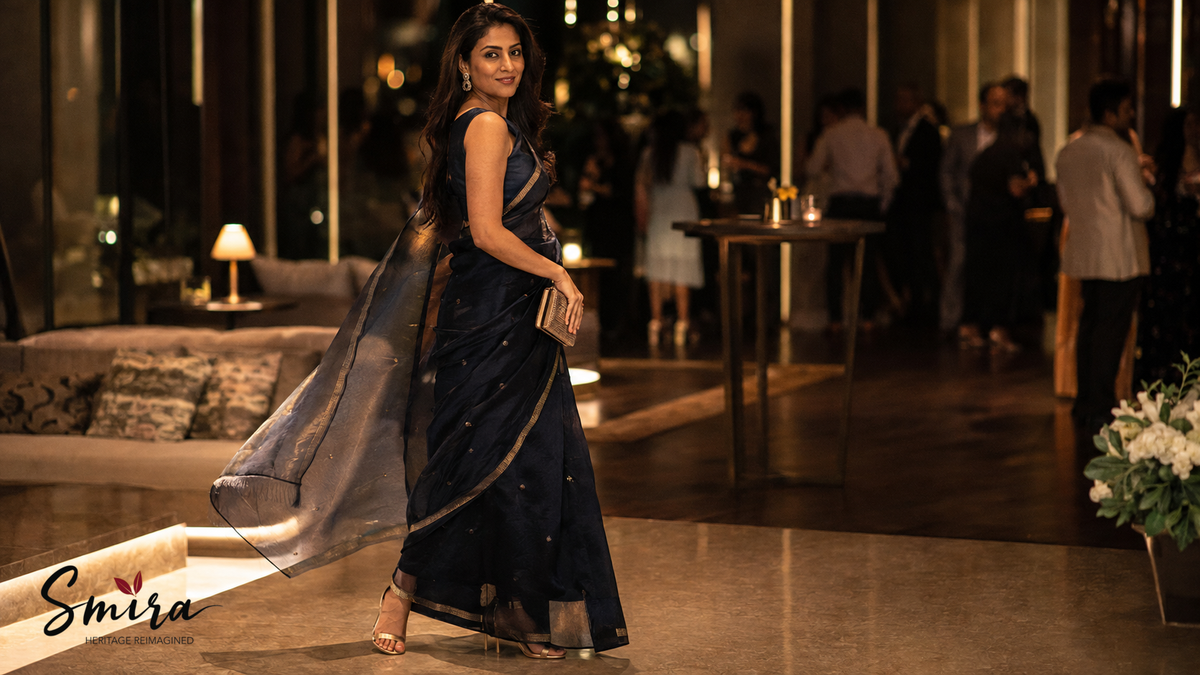
Choose a black or ink-blue organza silk saree with a tonal sleeveless blouse. Use an open-pallu Nivi drape to show the saree’s surface, then add statement earrings and a compact metallic clutch. Keep the necklace and bangles minimal.
2. The Reception Look
Select a wine, deep magenta or rich green Banarasi or georgette silk saree. Pair it with a plain fitted blouse and an open or neatly pleated pallu. Choose either chandbalis or a single necklace, depending on the neckline.
3. The Office Party Look
A deep-blue, black or mauve Chanderi saree works well with a boat-neck or high-neck blouse. Keep the Nivi drape clean and add studs, a watch and a structured clutch. The result feels occasion-ready without losing its professional character.
4. The Festive Evening Look
Try copper, gold or silver-grey tissue silk with a tonal blouse. A belted Nivi drape adds structure and keeps the saree secure. Finish with smaller earrings or a few bangles rather than a full jewellery set.
5. The Sundowner Look
Choose blush, dusty lavender, pistachio or soft peach in organza or georgette silk. Add a gentle contrast blouse, relaxed open pallu and pearls or delicate metallic jewellery. Block heels will keep the look comfortable across an outdoor venue.
Common Party Wear Saree Styling Mistakes
Even strong individual pieces can result in an unresolved outfit when the decisions are made separately. Avoid these common mistakes:
-
Making the saree, blouse, jewellery and makeup equally heavy.
-
Choosing a fabric only for photographs without considering movement or event duration.
-
Ignoring the venue’s lighting and level of formality.
-
Draping the saree before selecting the footwear.
-
Wearing a new blouse or unfamiliar drape without testing it.
-
Folding away the most distinctive part of the border or pallu.
-
Choosing a trend that does not suit the occasion or feel natural to you.
The best party wear saree styling does not call attention to the effort behind it. The outfit feels complete because each element has a clear role.
Frequently Asked Questions About Party Wear Saree Styling
Which Saree Is Best for a Party?
The best saree depends on the party. Georgette silk works well for movement-heavy events, organza creates a structured statement, tissue silk offers evening luminosity, and Banarasi or Chanderi sarees bring handcrafted depth to formal celebrations. Choose by setting, duration and movement rather than looking for one fabric that works everywhere.
Which Saree Colour Is Best for a Night Party?
Ink blue, wine, black, emerald, deep magenta and rich purple generally retain depth under evening light. Metallic shades such as antique gold, copper and silver-grey can also work well. Consider the fabric’s surface because a matte silk and reflective tissue in the same colour will look different under artificial lighting.
How Can I Make a Simple Saree Look Party-Ready?
Use one stronger styling element. Add a contrast or structured blouse, choose an open or belted drape, introduce statement earrings, or carry a distinctive clutch. A simple saree does not need every element at once; one deliberate focal point is usually more effective.
Which Blouse Looks Best With a Party Wear Saree?
A worked saree usually looks most balanced with a clean tonal blouse, while a quieter saree can support contrast colour, an interesting neckline or controlled embroidery. Fit, movement and the planned jewellery are as important as the blouse design.
Which Saree Drape Is Best for Dancing?
A pleated-pallu or belted Nivi drape is usually the most secure for dancing. Pin the waist pleats from inside, secure the pallu at the shoulder and test the complete drape with the intended footwear before the event.
Can a Handloom Silk Saree Work for a Cocktail Party?
Yes. A handloom saree can look contemporary when fabric weight, colour and styling match the occasion. Lighter Banarasi, Chanderi, tissue silk, organza silk and georgette silk can all work for cocktail settings. Pair a strong weave with a clean blouse and restrained accessories rather than trying to make it resemble a sequin saree.
How Can I Avoid Looking Overdressed in a Party Saree?
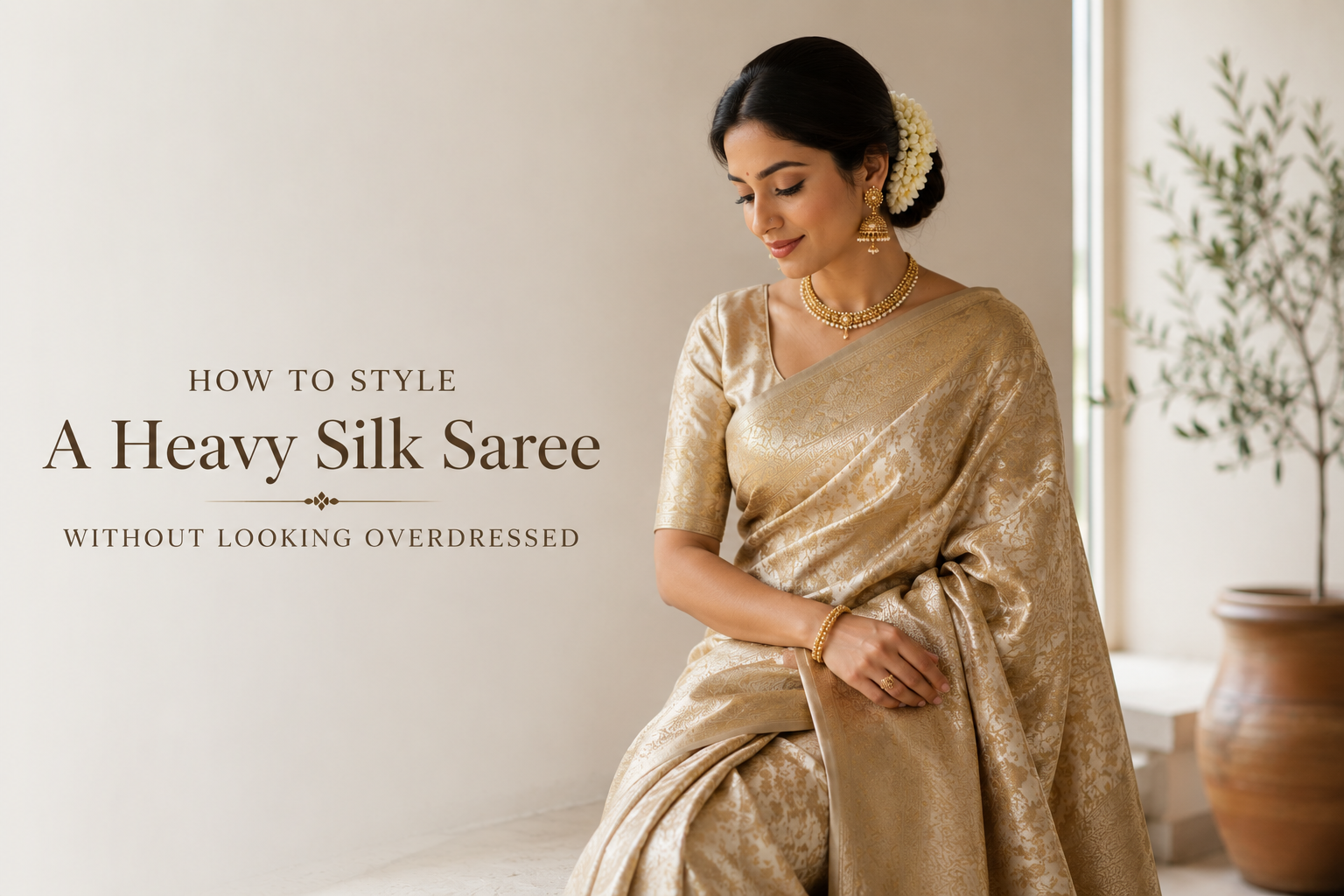
Choose one lead element and reduce competition around it. If the saree is richly woven or embroidered, keep the blouse and jewellery controlled. If the saree is quiet, allow the blouse or one accessory to lead. For more detailed guidance, read Smira’s guide to styling a heavy silk saree without looking overdressed.
Final Thoughts
Learning how to style a saree for a party is less about adding more and more about making better connections. Match the saree to the event, choose a fabric that works with movement and light, select the colour for the venue, and decide whether the saree or blouse will lead. Then choose a secure drape, one accessory focal point and test the complete outfit through movement.
When these decisions support one another, a handcrafted saree can feel as relevant at a cocktail dinner as it does at a traditional celebration.
Explore Smira’s Dazzle at Dusk collection to discover handcrafted sarees